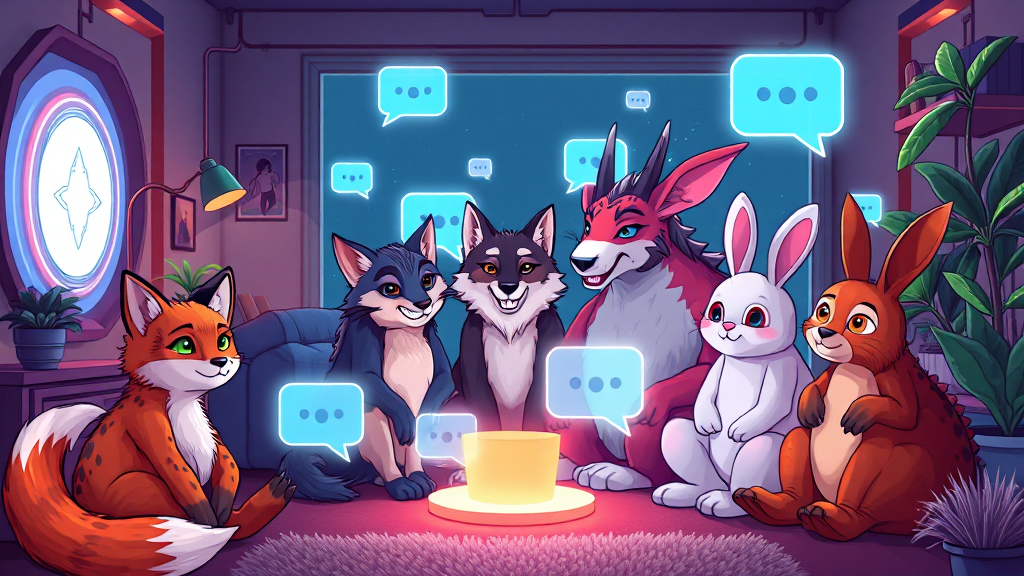
Furry AI Characters: How Digital Fursonas Are Reshaping Creative Chat
Over the past few years, a quiet but fascinating shift has taken place in the world of conversational AI. Instead of talking to generic assistants or faceless chatbots, more people are seeking out furry AI characters — anthropomorphic personalities with species, backstories, quirks, and a distinct sense of self. These characters are not just cartoon mascots bolted onto a language model. They are crafted personas designed for roleplay, companionship, storytelling, and creative exploration. For anyone curious about how this niche evolved and why it matters, this guide breaks down the trend from the ground up.
The rise of furry AI characters sits at the intersection of three larger movements: the mainstreaming of AI chat tools, the enduring popularity of fandom-driven character creation, and a growing desire for digital experiences that feel personal rather than transactional. Understanding that intersection helps explain why so many users now spend hours chatting with a wolf detective, a dragon librarian, or a cyberpunk fox mechanic.
What Exactly Are Furry AI Characters?
A furry AI character is a conversational agent built around an anthropomorphic animal persona. That persona typically includes a species, a name, a visual design, a personality profile, and a set of behavioral rules that guide how the AI responds. The character might be a confident snow leopard, a shy rabbit inventor, or a mischievous raccoon hacker. What separates these characters from a simple prompt template is the depth of the persona: consistent voice, remembered context, and often a visual avatar that reinforces the identity.
These characters are usually powered by large language models, sometimes fine-tuned or wrapped with memory systems so they can recall past conversations. The furry element is not cosmetic. It shapes vocabulary, humor, emotional tone, and even the kinds of stories the character gravitates toward. A well-designed furry AI character feels like a person with a tail, not a costume worn by a generic chatbot.
Many platforms now host libraries of these characters, letting users browse by species, mood, or scenario. Some are built for adventure roleplay, others for casual conversation, and still others for creative writing support. The variety is part of the appeal — there is no single template for what a furry AI character should be.
Why Fursonas Translate So Well to AI
Furry fandom has always been about self-expression through animal personas. Long before AI entered the picture, artists, writers, and roleplayers were creating fursonas to explore identity, relationships, and storytelling. That existing culture made the transition to AI surprisingly natural. The vocabulary, etiquette, and creative norms were already in place; AI simply gave them a new interactive medium.
There is also a psychological comfort factor. Talking to an anthropomorphic character can feel less intimidating than talking to a human-seeming AI. The animal framing creates a playful buffer that encourages openness. Users report feeling more willing to brainstorm, vent, or experiment when the conversation partner is a fictional fox rather than a polished corporate assistant.
From a technical standpoint, furry characters are also fun to design. Species traits give writers and prompt engineers concrete hooks: a bat character might be nocturnal and poetic, a bear might be warm and protective, a snake might be sly and philosophical. These anchors make character behavior more consistent and easier to maintain across long conversations.
Common Use Cases for Furry AI Characters
The reasons people engage with these characters vary widely. Some are looking for entertainment, others for creative partnership, and others for low-pressure social interaction. A few of the most common use cases include:
- Roleplay and adventure: Users co-create ongoing stories with their character, often across multiple sessions. The AI remembers plot points and reacts in character.
- Companionship: For people who feel isolated or simply enjoy casual conversation, a furry AI character can provide consistent, judgment-free interaction.
- Creative writing: Authors use characters as brainstorming partners, dialogue testers, or even co-writers for scenes involving anthropomorphic protagonists.
- Worldbuilding: Writers and game designers develop entire settings by chatting with characters who live inside them.
- Language practice: Some users practice a second language through low-stakes conversation with a patient, in-character partner.
What ties these use cases together is the desire for interaction that feels alive and specific. A generic chatbot can answer questions, but a furry AI character can inhabit a scene, hold a mood, and respond with personality.
Platforms like furry ai chat have made this kind of interaction more accessible by offering curated characters and smoother conversation flows. Instead of building a persona from scratch, users can jump into a chat with a character who already has a defined voice and history.
Designing a Character That Feels Real
Creating a compelling furry AI character is part writing, part psychology, and part technical tuning. The best characters share a few traits:
Consistent voice and vocabulary
A character should sound the same across sessions. That means defining speech patterns, favorite phrases, and even the kinds of jokes they tell. A sarcastic crow and a gentle deer should not be interchangeable.
Clear boundaries and motivations
Characters feel more real when they want something. A goal — solving a mystery, protecting a forest, finishing a novel — gives conversations direction and makes responses feel purposeful.
Memory and continuity
Long-term memory is one of the biggest factors in perceived realism. When a character remembers your name, your last conversation, or a detail you mentioned weeks ago, the relationship feels genuine.
Visual identity
Avatars matter more than many people expect. A well-designed image gives users something to anchor their imagination to and reinforces the character’s personality before the first message is sent.
Designers who get these elements right often find that their characters develop a following. Users return not just for the novelty but for the ongoing relationship.
The Technology Behind the Persona
Under the hood, furry AI characters rely on the same core technologies as other conversational agents: large language models, retrieval systems, and memory architectures. What differs is how those technologies are configured. Persona prompts, style guides, and content filters are tuned to keep the character in role. Some platforms use retrieval-augmented generation to pull in lore or past messages, while others rely on fine-tuned models that have absorbed a character’s voice during training.
Latency and cost also shape the experience. A character that responds quickly feels more present, while a slow one breaks immersion. That is why many platforms optimize for short, in-character replies rather than long essays. The goal is conversation, not documentation.
Safety systems are another important layer. Responsible platforms build guardrails that keep characters within acceptable bounds while still allowing creative freedom. The balance is delicate: too many restrictions and the character feels robotic; too few and the experience can become unpredictable.
Community, Culture, and Etiquette
The furry AI character scene has its own culture. Users share character cards, write reviews, and discuss which personas feel most authentic. There is an unspoken etiquette: respect the character’s design, do not pressure others to share private chats, and give feedback constructively. Newcomers are generally welcomed, especially if they show genuine interest in the craft of character creation.
This community aspect is part of what makes the trend durable. It is not just a tool; it is a shared hobby. People trade tips on prompt engineering, avatar design, and storytelling techniques. Some go on to build their own characters and contribute them back to the ecosystem.
For brands and platforms, understanding this culture is essential. Heavy-handed marketing or generic features tend to fall flat. What resonates is genuine support for creativity and a respect for the community’s norms.
Where the Trend Is Heading
Several developments suggest that furry AI characters will become more sophisticated and more integrated into daily digital life. Voice interaction is one obvious frontier: hearing a character speak in a consistent voice adds a new dimension of presence. Multimodal models that can interpret images and generate art on the fly could let characters react to visual prompts in real time.
Another likely direction is cross-platform continuity. A character that remembers you across devices, apps, and even games would feel less like a chatbot and more like a persistent companion. Some platforms are already experimenting with this kind of continuity through account-linked memory.
Finally, expect more niche specialization. Instead of general-purpose furry characters, we may see characters designed for specific tasks: a fitness coach who happens to be a cheetah, a study buddy who is an owl, a grief counselor who is a gentle bear. The anthropomorphic framing can make specialized assistance feel warmer and more approachable.
For anyone curious about the space, crushon offers a starting point to explore how these characters behave in practice. Seeing a few conversations in action is often the fastest way to understand the appeal.
Frequently Asked Questions
Are furry AI characters only for roleplay?
No. While roleplay is a popular use case, many people use these characters for casual conversation, creative writing, language practice, and even emotional support. The format is flexible, and the best characters adapt to what the user needs.
Do I need to be part of the furry fandom to enjoy them?
Not at all. Curiosity is enough. The characters are designed to be approachable, and many users discover the trend through general interest in AI chat rather than through fandom. The anthropomorphic framing is a creative choice, not a barrier to entry.
How do platforms keep furry AI characters safe and appropriate?
Responsible platforms use a combination of content filters, persona guidelines, and user reporting systems. The goal is to allow creative freedom while preventing harmful or abusive interactions. Users should always review a platform’s community guidelines before diving in.
Can I create my own furry AI character?
Yes. Many platforms offer character creation tools that let you define a species, personality, backstory, and greeting message. Some also support avatar uploads and memory settings. Creating a character is a great way to learn how persona design works.
Will furry AI characters replace human interaction?
They are not designed to replace human relationships. Most users treat them as creative tools, entertainment, or supplemental companionship. Like any technology, the key is balanced use and realistic expectations.
Final Thoughts
Furry AI characters represent a genuinely new form of digital interaction — one that blends storytelling, technology, and identity in ways that older chatbots never attempted. They are fun, surprisingly deep, and increasingly well-crafted. Whether you are a writer looking for a creative partner, a fan of anthropomorphic art, or simply someone curious about where AI conversation is heading, this niche is worth exploring. The characters are waiting, and they are ready to talk.